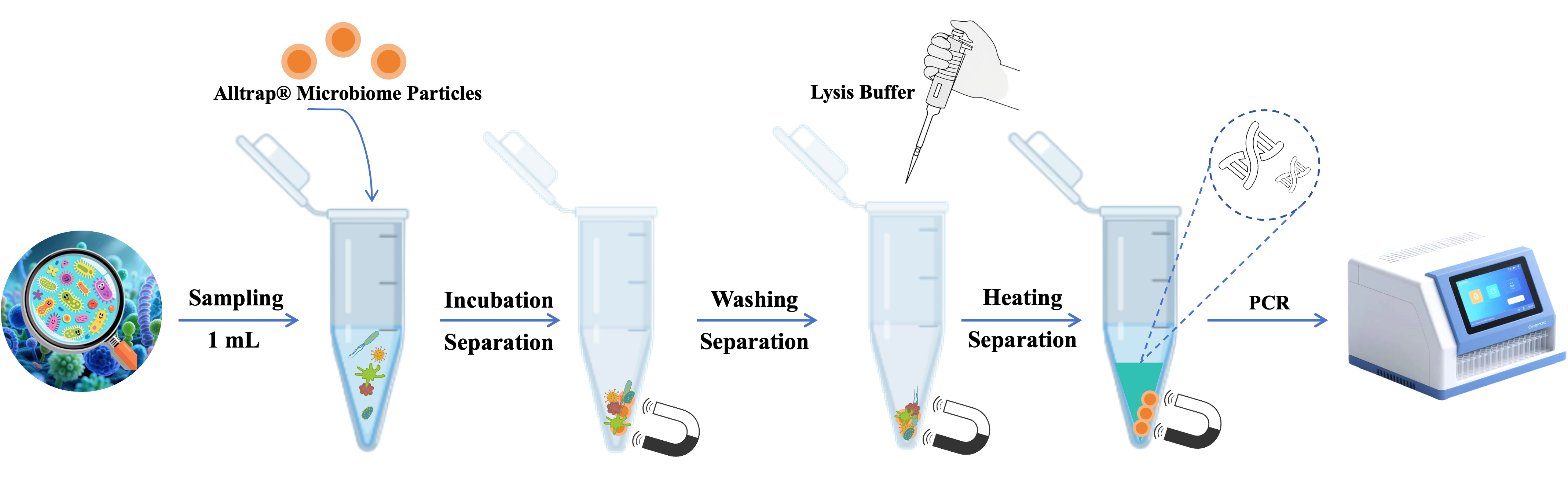
Through surface functionalization with target-specific ligands, this technique allows for highly efficient isolation and enrichment of microorganisms of interest. It offers several key advantages for research applications:
Rapid Processing: Enables isolation within tens of minutes, dramatically reducing time compared to conventional culture-based methods.
High Sensitivity: Detection down to single-digit copy numbers of microorganisms is achievable, particularly when coupled with PCR amplification.
Robust Performance in Complex Matrices: Effectively handles challenging sample types with minimal preprocessing requirements.
High-throughput Compatibility: readily adaptable to automated platforms, facilitating large-scale pathogen screening and surveillance studies.